

When temperatures start to drop, many homeowners turn on their pool heater for the first time in months and find that it will not ignite, shuts off suddenly, or struggles to reach the set temperature. Pool heaters run under very different conditions in cooler weather, and small issues that went unnoticed during warmer months often become much more noticeable once cold air, colder water, and seasonal debris start affecting the system.
Understanding how a pool heater works and how cold weather changes its behavior can help you identify the reason behind common winter failures.
How Cold Weather Affects Pool Heater Performance
Pool heaters rely on a stable combination of ignition, airflow, and water flow. When outside temperatures fall, several things change inside the heater:
- metal components contract and take longer to warm
- the ignition system requires more energy to start combustion
- water entering the heater is colder and slows the heating process
- sensors detect more temperature fluctuations and may shut down for safety
Even a small airflow restriction or weak ignition component that went unnoticed in warm weather can cause repeated shutdowns once the system is exposed to cooler conditions.
Weak Water Flow Is the Most Common Cold-Weather Heater Problem
A pool heater cannot operate unless water moves steadily through the heat exchanger. During winter, low flow becomes more common because:
- filters accumulate debris from fall
- pump baskets fill with leaves and seeds
- water levels drop more quickly
- circulation systems run shorter schedules
When flow is restricted, the heater’s safety system senses the imbalance and shuts the unit off to prevent overheating. This is why many heaters turn on, begin warming, and then shut down immediately when temperatures fall.
Why Ignition Problems Show Up More in Cold Weather
Most gas heaters follow the same ignition sequence: the blower moves air, the igniter warms, the burner lights, and the flame sensor confirms ignition. Cold weather makes this sequence more sensitive.
Igniter Takes Longer to Reach Temperature
Igniters must get very hot before the heater can fire. In cold temperatures, the igniter may struggle to reach the required temperature quickly, especially if it is aging or coated in debris.
Burner Assembly Blocked by Dust or Deposits
Even a light layer of soot or dust on the burner tray reduces the flame’s ability to spread evenly. The result is delayed ignition, loud clicking, or complete shutdown.
Airflow Restrictions Inside the Heater
Airflow is one of the most overlooked reasons why your pool heater stops working in cold seasons. The burner compartment must remain clear so the blower can move air properly. If anything restricts this pathway, ignition cannot start as intended.
The photo below shows an extreme example that technicians see more often during fall and winter.
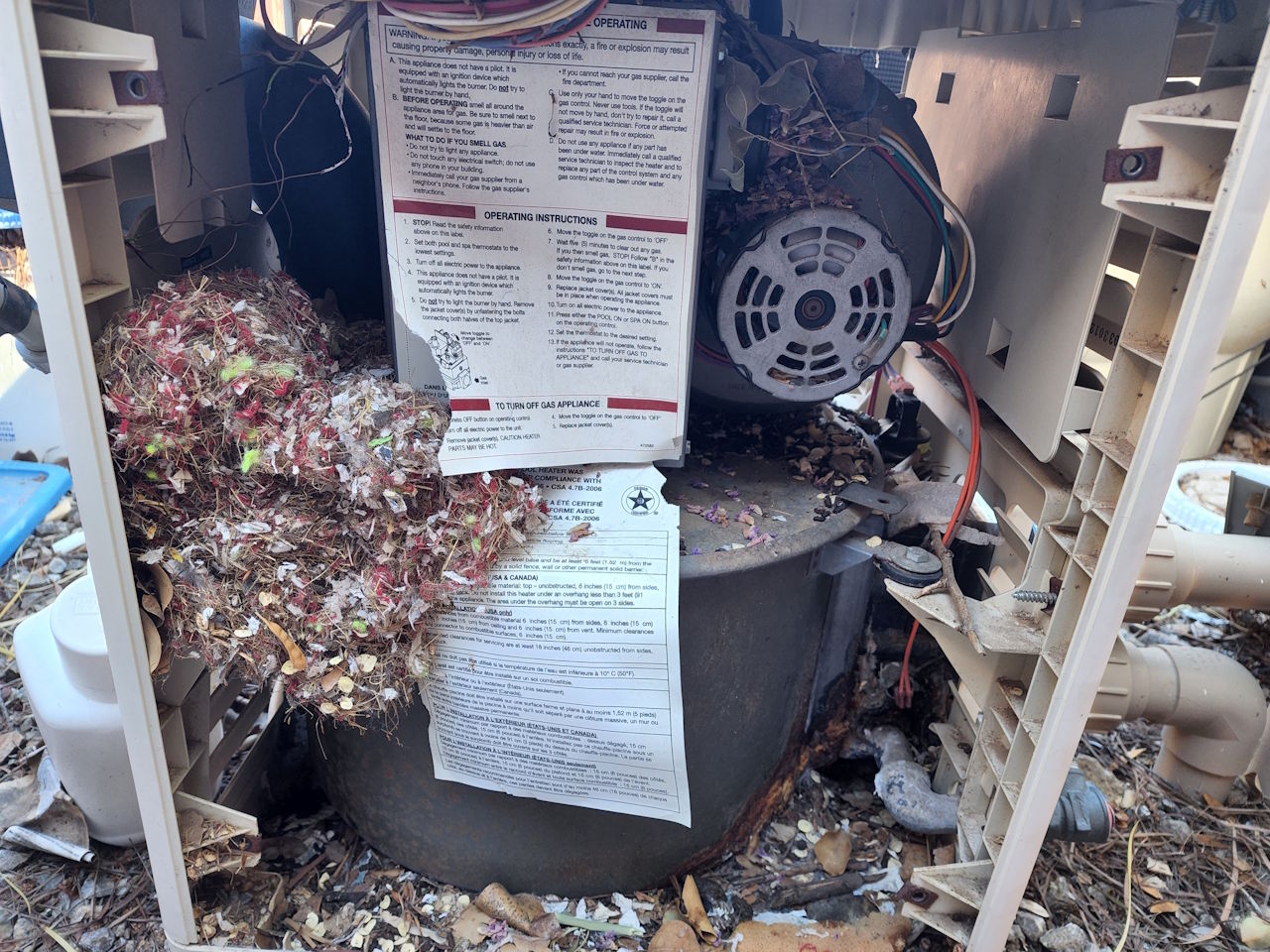
Debris or Rodent Nesting Inside the Heater
Rodents and pests look for warm, sheltered areas when temperatures fall. Pool heaters create the perfect environment. This can lead to:
- leaves and plant material packed around the combustion chamber
- shredded nesting material blocking airflow
- restricted ventilation
- damaged wiring
- overheating or rapid shutdown
When a heater is filled with debris, the blower cannot move enough air to create the correct fuel-air mixture. This prevents the heater from igniting safely.
Safety Sensors That Shut Down Heaters in Cold Conditions
Modern heaters use multiple sensors to prevent unsafe operation. Cold weather affects all of them:
- Pressure switch shuts the heater off if flow is too weak
- High-limit switch turns the system off if temperatures rise too fast
- Temperature sensors react more dramatically to cold water entering the heater
- Flame sensor fails if debris blocks the flame path
If any sensor detects abnormal conditions, the heater will not start or will shut off quickly.
Short Cycling: When the Heater Turns On and Off Repeatedly
Short cycling happens when the heater starts normally but shuts off before reaching the set temperature. Common winter causes include:
- inconsistent water flow
- cold air disrupting the flame pattern
- partially blocked exhaust pathways
- weak ignition components
- debris inside the combustion chamber
This pattern stresses internal components and often leads to complete failure if the underlying cause is not corrected.
Simple Checks Homeowners Can Do Before Scheduling Service
A few basic steps can help you determine if the problem is simple or more involved:
- clear leaves and debris from around the heater
- empty pump and skimmer baskets
- confirm proper water level
- check filter pressure
- ensure heater panels are closed securely
- verify the pump schedule provides full flow during heating
- restart the heater after making adjustments
If the heater still struggles, shuts down repeatedly, or refuses to ignite, the issue is likely inside the heater or related to flow or sensors.
When a Professional Heater Inspection Is Necessary
Some problems require more than external checks. A pool heater technician may need to:
- clean the internal combustion chamber
- remove rodent nests or debris
- test sensors and the ignition sequence
- verify airflow and blower performance
- inspect wiring and burner components
- check for damage caused by moisture or corrosion
Cold weather exposes weaknesses quickly, and a thorough inspection ensures that the heater can operate safely and efficiently for the rest of the season.
Related Resource
If your heater issues appear alongside low flow, strange noises, or inconsistent water movement, you may also find our guide helpful: Troubleshooting Common Pool Equipment Issues.

