

A green pool is not just an aesthetic problem. In Arizona, it is usually a signal that the pool’s chemistry, filtration, and circulation systems have fallen out of sync with the environment. Extreme heat, intense sunlight, desert dust, and heavy seasonal use create conditions where algae can take over faster than many homeowners expect.
This guide explains why green pools are so common in Arizona, what is actually happening inside the water and equipment, and how green pools are properly cleared and prevented using a system-based approach rather than quick fixes.
Why Pools Turn Green So Quickly in Arizona
In simple terms, a green pool is the result of algae growth. But in Arizona, algae growth is accelerated by environmental conditions that do not exist in many other parts of the country.
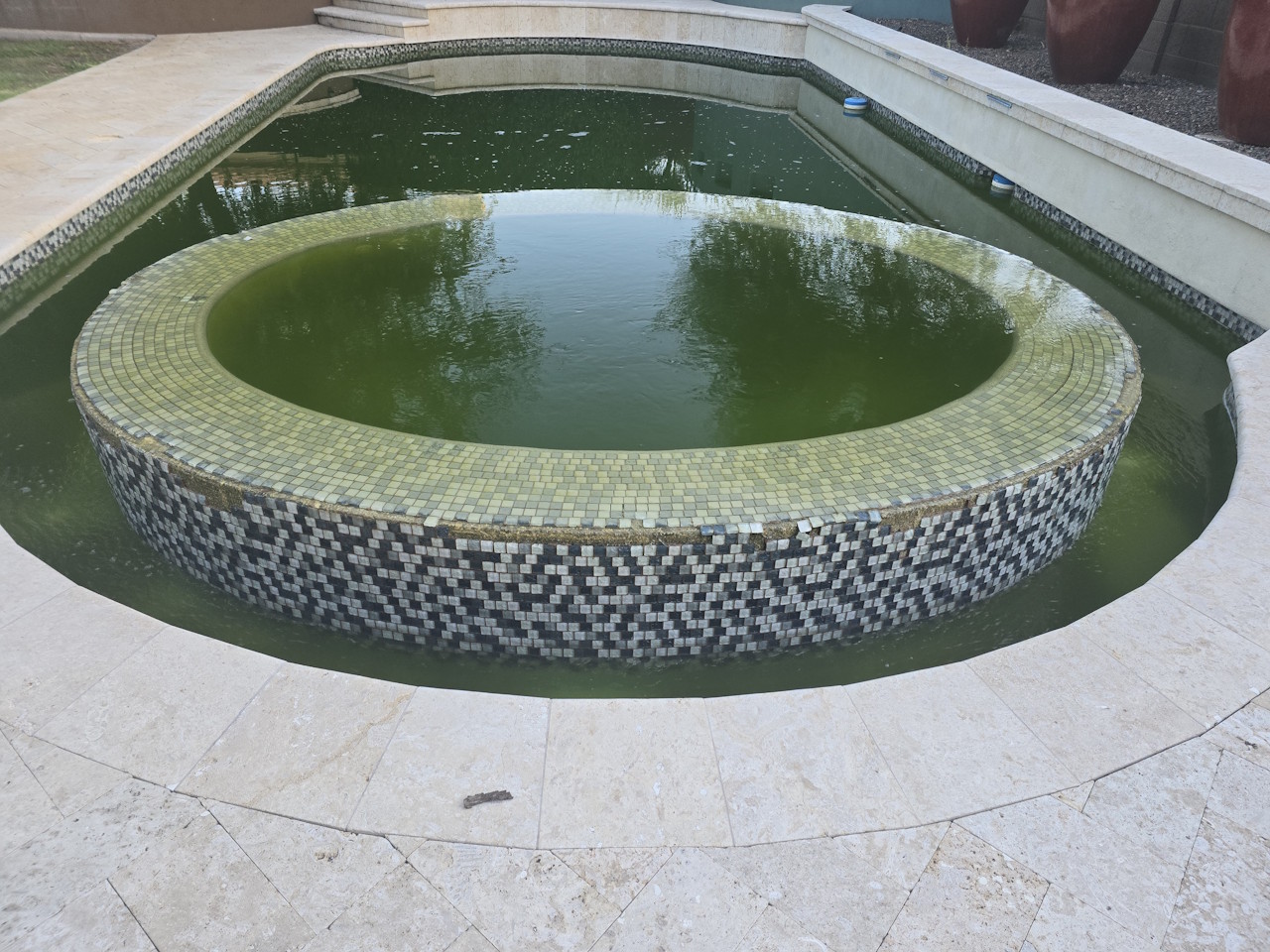
Warm water acts as a biological accelerator. When pool water stays consistently warm, algae reproduces rapidly. Add intense ultraviolet exposure, and chlorine burns off faster than standard chemical charts assume. Even pools that appeared balanced earlier in the week can lose effective sanitation within a short window.
Monsoon dust plays a major role as well. Unlike leaves or large debris, Arizona dust is extremely fine. It introduces organic material that dissolves into the water and feeds algae growth while also compacting inside filters. Pool technicians often see pools turn green within days of a dust storm, even when those pools were previously clear and maintained.
Another contributing factor is heavy pool use. Sunscreen, body oils, and organic contaminants enter the water during peak swim season. These substances bind to particles already in the pool, creating an environment where algae can establish quickly if sanitation slips even slightly.
What a Green Pool Actually Means for Water Safety
A green pool does not automatically mean the water is toxic, but it does mean the pool is no longer properly sanitized. Algae itself reduces water clarity, which creates a visibility risk and makes it difficult to see the pool floor, drains, or swimmers.
More importantly, algae indicates that chlorine is no longer effectively controlling biological growth. When sanitation breaks down, conditions become favorable for bacteria and other microorganisms to develop alongside algae. This is why swimming should be avoided until the water is fully clear and balanced again.
In Arizona, where pools are used frequently and by families, restoring clarity and sanitation is not just about appearance. It is about returning the pool to a state where it can safely be used as intended.
Why Chlorine Alone Often Fails to Clear a Green Pool
One of the most common mistakes homeowners make is assuming that adding more chlorine will automatically fix a green pool. Chlorine is essential, but it only works effectively within specific chemical conditions.
When pH levels rise too high, chlorine becomes far less effective at killing algae. Stabilizer levels that are too high can also bind chlorine, preventing it from working even when test results show chlorine is present. In Arizona, intense sunlight further complicates the issue by breaking down free chlorine faster than expected.
Another issue is timing and system support. Chlorine kills algae, but it does not remove it from the pool. Without proper circulation and filtration, dead algae remains suspended in the water or settles back into surfaces, leading to cloudiness or recurring blooms. This is why repeated shocking without addressing underlying balance or mechanical issues often produces little improvement.
Fixing a green pool requires addressing the full system rather than relying on a single treatment.
How to Properly Fix a Green Pool
A green pool is properly fixed by restoring control over three things at the same time: water balance, circulation, and filtration. Treating only one of these rarely works in Arizona’s climate.
The process begins by correcting water chemistry so chlorine can function properly. This means bringing pH and stabilizer levels into a range where chlorine is able to kill algae instead of being neutralized by sunlight or bound up in the water. Without this step, adding more chlorine simply increases chemical use without solving the problem.
Once sanitation is effective, algae must be physically removed from the pool. This is where brushing, continuous circulation, and active filtration become critical. As algae dies, it turns into fine particulate matter that clouds the water and quickly loads the filter. Running the system continuously and cleaning the filter as pressure rises allows this material to be captured and removed instead of settling back into the pool.
Finally, the pool must be stabilized after clearing. Chlorine levels are adjusted back to normal operating ranges, circulation run times are set for Arizona heat conditions, and filtration is monitored closely for several days. Skipping this stabilization phase is one of the main reasons pools turn green again shortly after appearing clear.
In Arizona, fixing a green pool is not a single treatment. It is a coordinated recovery process that restores balance to the entire system so algae cannot re-establish.
The Role of Filtration and Circulation in Clearing a Green Pool
Filtration is one of the most overlooked factors in green pool recovery. Once algae begins to die, it turns into fine particulate matter that must be physically removed from the water. In Arizona, this material behaves differently than typical debris.
Fine desert dust and dead algae compact quickly inside filters, restricting water flow. Cartridge filters often require multiple cleanings during a green pool cleanup, while sand and DE filters may need frequent backwashing to maintain circulation. Rising filter pressure is a common sign that the system is doing its job but becoming overwhelmed.
Circulation matters just as much as filtration. Poor water movement creates dead zones where algae can survive treatment. Running the system continuously during recovery allows chemicals to stay evenly distributed and helps the filter remove contaminants more efficiently.
Clearing a green pool is not just a chemical process. It is a coordinated effort between water balance, circulation, and filtration working together.
How Long It Really Takes to Clear a Green Pool in Arizona
The time required to clear a green pool depends on several factors, including how severe the algae bloom is, the condition of the filtration system, and how quickly corrective steps are taken.
Mild cases may begin to clear within a few days once chemistry and filtration are addressed. More severe blooms can take longer, especially after dust storms or periods of neglect. Cloudy water after treatment is often a sign that algae is dying and being filtered out, not that the process has failed.
Arizona pools frequently take longer to recover than pools in milder climates because filters clog faster and chlorine depletion occurs more rapidly. Rushing the process or skipping steps often leads to algae returning shortly after the water clears.
Why Some Green Pools Keep Coming Back
Recurring green pools are usually a symptom of unresolved system issues rather than bad luck. Small chemical imbalances that might not matter elsewhere can become major problems under Arizona’s heat and sun exposure.
Inconsistent maintenance, filters that never fully recover, and circulation systems that are undersized or restricted all contribute to repeat algae blooms. In many cases, the pool clears temporarily but returns to green because the root cause was never corrected.
Preventing repeat issues requires understanding how the pool responds to seasonal stress and adjusting care routines accordingly, rather than reacting only after the water turns green.
When a Green Pool Needs Professional Attention
There are situations where do-it-yourself treatment becomes inefficient or ineffective. If a pool remains green after multiple treatment attempts, if algae returns within days, or if filter pressure stays high despite cleaning, there may be underlying mechanical or system-level problems.
Professional evaluations focus on identifying circulation limitations, filtration failures, or chemical imbalance patterns that are difficult to diagnose without experience. Addressing these issues early can reduce wasted chemicals, shorten recovery time, and prevent repeated outbreaks.
In Arizona, where environmental stress on pools is constant, professional intervention is often less about emergency pool cleanup and more about restoring system balance.
Preventing Green Pools in Arizona’s Extreme Climate
The most effective way to prevent green pools is consistency. Regular monitoring of chemistry, proactive filter maintenance, and adjusting circulation during extreme heat periods all reduce the likelihood of algae gaining a foothold.
Arizona pool care requires anticipating stress rather than reacting to it. Maintaining sanitation buffers, preparing for dust storms, and addressing small issues early keeps the pool stable even during the most demanding months of the year.
If your pool has turned green or continues to struggle despite treatment, a professional evaluation can help identify whether the issue is chemical, mechanical, or environmental. Our team at Aqua Squad Pools & Landscaping assesses circulation, filtration, and water balance together, helping restore clarity efficiently and prevent repeat algae problems. Scheduling an inspection early often shortens recovery time and reduces unnecessary chemical use.

