

Cloudy pool water is one of the most common problems homeowners deal with, and in most cases the cause is not what people think. Many assume their chlorine is low or their pH is off, but in reality cloudy water often starts with a filtration issue. When your pool filter becomes packed with debris, fine dust, oils, and mineral buildup, the system cannot circulate water properly. Once circulation drops, clarity drops with it.
Most homeowners never see inside their filter, so they do not realize how severe the buildup can become. A filter that looks clean on the outside can be completely coated on the inside, blocking the flow of water from the moment you turn the pump on. The before and after comparison in the photo shows exactly what is hiding inside many filters once they are opened for a complete teardown.
This article explains why filters clog, how that leads to cloudiness, and why professional filter cleaning is one of the most effective ways to restore water clarity.
Why Cloudy Pool Water Starts With Poor Filtration
Your pool’s filtration system is responsible for removing microscopic debris that chlorine cannot break down. Every time the water circulates through the filter, the system traps fine particles that would otherwise stay suspended in the pool. When the filter is clean, this process works extremely well. When the filter is overloaded, everything slows down.
A DE filter uses a set of fabric-coated grids that are covered with DE powder. This powder creates a porous layer that collects small particles as water passes through. Over time the grids become coated with oils, dust, and organic material. If this buildup becomes too thick, the pores close and restrict the flow of water.
A clogged filter reduces circulation, increases pressure inside the tank, and stops the system from capturing the tiny particles that make water appear cloudy. When circulation weakens, chlorine has trouble moving through the pool evenly, which allows fine debris to stay suspended and creates the dull, milky look that homeowners often notice.
Cloudy water is ultimately the result of your filtration system losing the ability to keep up. In many cases the filter simply needs a deep cleaning for the water to clear again.
What Conditions Do to Your Pool Filter
Filters become dirty in every state, but here in Arizona they face conditions that cause them to clog much faster than in other regions. The desert environment produces extremely fine dust that settles into the water, and this dust becomes even heavier during a haboob or any strong monsoon storm. The National Weather Service explains that dust storms and haboobs in the Southwest can create walls of dust that carry huge amounts of fine particles into homes, yards, and pools. When that material enters the pool, it compacts inside the filter and forms a dense layer that blocks flow.
Pools are also used heavily during the summer, which introduces more sunscreen, lotions, body oils, and organic debris into the water. These substances bind to the filter material and create a sticky coating that simple rinsing cannot remove. Even when the water looks clear at the surface, the filter collects everything the system pulls in.
Arizona also has naturally high calcium hardness. Minerals settle into the grids and cartridges and slowly create a hardened layer that reduces flow. A hard water fact sheet from the City of Scottsdale notes that low rainfall, hot weather, and mineral rich soils all contribute to very hard water throughout the Sonoran Desert. This is why filters here often need deeper cleaning and more frequent maintenance than in cooler or more humid regions.
All of these conditions combine to overload the filtration system. Dust from a haboob, oils from frequent use, and mineral scale from hard water create layers inside the filter that restrict water movement and turn the water cloudy.
Common Signs Your Filter Is Clogged and Causing Cloudiness
A clogged filter does not always show obvious symptoms right away. However, there are several reliable warning signs that your filtration system is struggling and may be the direct cause of the cloudiness you see in the water.
Rising filter PSI
If your filter pressure climbs and stays high, it means water is struggling to move through the media. When PSI increases quickly after cleaning, it is a sign that the filter is packed with material inside the grids.
Weak water flow at the returns
When the returns feel weak or inconsistent, your pump is working harder than normal to push water through a restricted filter.
Milky or dull pool water
Cloudy water is usually the first sign of poor filtration. Small particles stay suspended because the filter cannot pull them out fast enough.
Fine particles returning through the returns
If you see small dust-like particles drifting back into the pool, the filter grids may be overloaded or torn.
DE powder in the pool
When you see DE collecting at the bottom, it means the internal parts of the filter may be damaged or not seated properly.
Pump running louder or hotter
Restricted flow makes the pump work harder, which can shorten its lifespan and cause noise or overheating.
These signs indicate that the filter is no longer performing efficiently and that the system needs more than a quick rinse.
Before and After: What a Dirty Filter Really Looks Like Inside
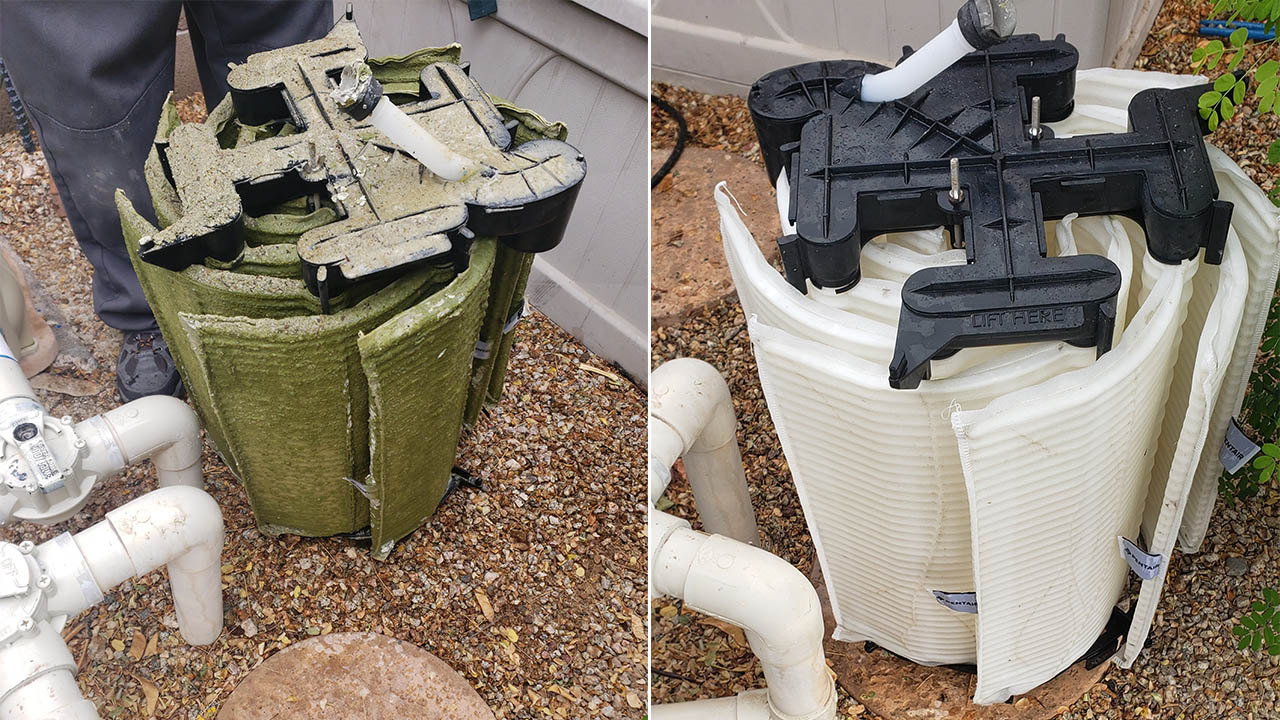
The photo comparison shows the reality of what is happening inside your filter once it becomes clogged. The “before” side displays grids that are heavily coated with oils, dust, and compacted debris. The layers are so thick that water cannot pass through easily, and the fabric underneath is barely visible. This coating behaves like a solid wall, blocking filtration and raising internal pressure.
The “after” section shows clean, restored grids that can move water freely again. The surfaces are no longer sealed by compacted material, and the system can once again capture fine particles.
Most homeowners never see this level of buildup because a complete teardown is required to expose the grids. A simple backwash or quick rinse does not remove this kind of compacted material. This is why regular deep cleaning is essential. It not only restores clarity but also protects the entire system.
In some cases cleaning is not enough. If the grids are torn, the manifold is cracked, or the frames are bent, the filter will continue returning debris to the pool. These damaged parts need to be replaced to restore proper filtration.
Deep Cleaning vs Backwashing vs Cartridge Rinsing
Many homeowners rely on backwashing or quick rinsing to maintain their filters, but these methods only remove loose debris. They do not remove the oils, calcium, or compacted dust that build up on the grid surfaces.
Backwashing
This pushes water backward through the filter to remove loose debris, but fine particles and oils remain stuck to the fabric.
Rinsing a cartridge
This is useful for basic maintenance, but cartridges can still hold deep layers of dirt that require soaking or professional cleaning.
Full teardown cleaning
This is the only method that removes compacted buildup. During a teardown, the technician opens the filter tank, removes the entire grid assembly, separates each grid, hoses them down thoroughly, inspects the manifold, checks the O-rings, and recharges the system with fresh DE powder. This level of cleaning restores normal flow and improves clarity.
If grids are old, brittle, or damaged, replacement is often the best solution to maintain proper filtration.
Cloudy Water and Chemistry: The Circulation Connection
Cloudiness is often blamed on chlorine, but chemistry alone cannot compensate for a clogged filter. According to CDC home pool treatment and testing guidance, good water quality depends on both proper circulation and maintaining sanitizer and pH in the recommended ranges. Water clarity depends on strong circulation. When water is not moving through the system properly, chlorine cannot distribute evenly and cannot sanitize the entire pool effectively.
Poor circulation creates stagnant areas where fine debris accumulates. These small particles reflect light and make the pool appear cloudy. If chlorine cannot reach these zones, they become ideal environments for early algae development.
A clogged filter also increases chemical demand. Homeowners often add more shock, clarifiers, or algaecide in an attempt to clear the water, but the problem remains because the system cannot move water through the filter fast enough.
This is why many cloudy water issues clear up quickly after restoring filtration flow.
When Cloudy Water Is Not Caused by the Filter Alone
In some cases, cloudy water can persist even after a filter has been fully cleaned and restored. When this happens, the issue often lies elsewhere in the circulation system. Weak pump output, suction-side air leaks, damaged internal filter components, or restricted plumbing lines can all reduce water movement enough to affect clarity.
When circulation drops anywhere in the system, fine particles remain suspended in the water instead of being captured by the filter. This is why cloudy water should be viewed as a system-level symptom rather than a filter-only problem. A broader equipment check can help identify whether flow, pressure, or mechanical issues are contributing to the problem.
How a Clean Filter Protects Your Pump and Saves You Money
Your pump is designed to move water freely through the system. When the filter is packed with debris, the pump must push against resistance. This causes several problems.
- Higher electricity use due to increased workload
- Excessive heat buildup that shortens pump lifespan
- Louder operation as the motor strains to maintain flow
- Increased wear on internal components
A clean filter allows water to move easily, reducing strain on the pump and restoring efficient operation. This saves electricity, reduces the likelihood of equipment breakdowns, and helps maintain consistent water clarity.
A clogged filter also causes homeowners to spend more on chemicals because the system is not circulating properly. Regular cleaning lowers chemical usage and keeps water balanced.
When You Should Schedule a Professional Filter Cleaning
A regular cleaning schedule is one of the best ways to prevent cloudy water and protect your equipment. Although basic maintenance is helpful, full cleaning should be performed at specific times throughout the year.
- At least twice a year for most pools
- After periods of heavy storms or dust
- When filter pressure stays high
- When water turns cloudy despite balanced chemistry
- After a green pool treatment
- When water flow at the returns becomes weak
- When the grids show signs of damage
Professional technicians can identify early issues, replace worn parts, and perform a complete breakdown that restores the system to full performance. This helps avoid repeated cloudiness and reduces the risk of algae growth.
Aqua Squad Can Restore Your Water Clarity and Filter Performance
Aqua Squad technicians specialize in complete filter breakdowns that remove compacted debris and restore proper flow. During a pool cleaning visit, our technician inspects the grids, checks for tears, examines the manifold, cleans the internal surfaces, and reassembles the system using the correct parts and materials. This ensures that your pump, filter, and plumbing are working together the way they should.
With weekly pool cleaning, full equipment repair services, and green pool recovery support, Aqua Squad can keep your water clear, safe, and ready for swimming. Whether your pool needs a seasonal filter cleaning or a complete equipment inspection, our team has the experience and training to do the job right.
Conclusion
Cloudy pool water is almost always a filtration issue, not a chemical one. When your filter becomes packed with dust, oils, and debris, the system loses the ability to circulate water properly. This leads to weak flow, dull water, high pressure, and increased chemical usage. A professional filter cleaning restores the system, protects your pump, and brings back the clear, sparkling water you expect.
If your pool looks cloudy or your filter pressure has been climbing, now is the time to schedule a full cleaning. Restoring filtration early prevents algae, reduces costs, and keeps your pool healthy all season long.

